
Heavy menstrual bleeding
If you carry spare clothes, get up repeatedly overnight or plan outings around access to a toilet, your periods are heavy enough to discuss. You don’t have to measure your blood loss. How the bleeding affects your life is what matters.
What might be causing the bleeding?
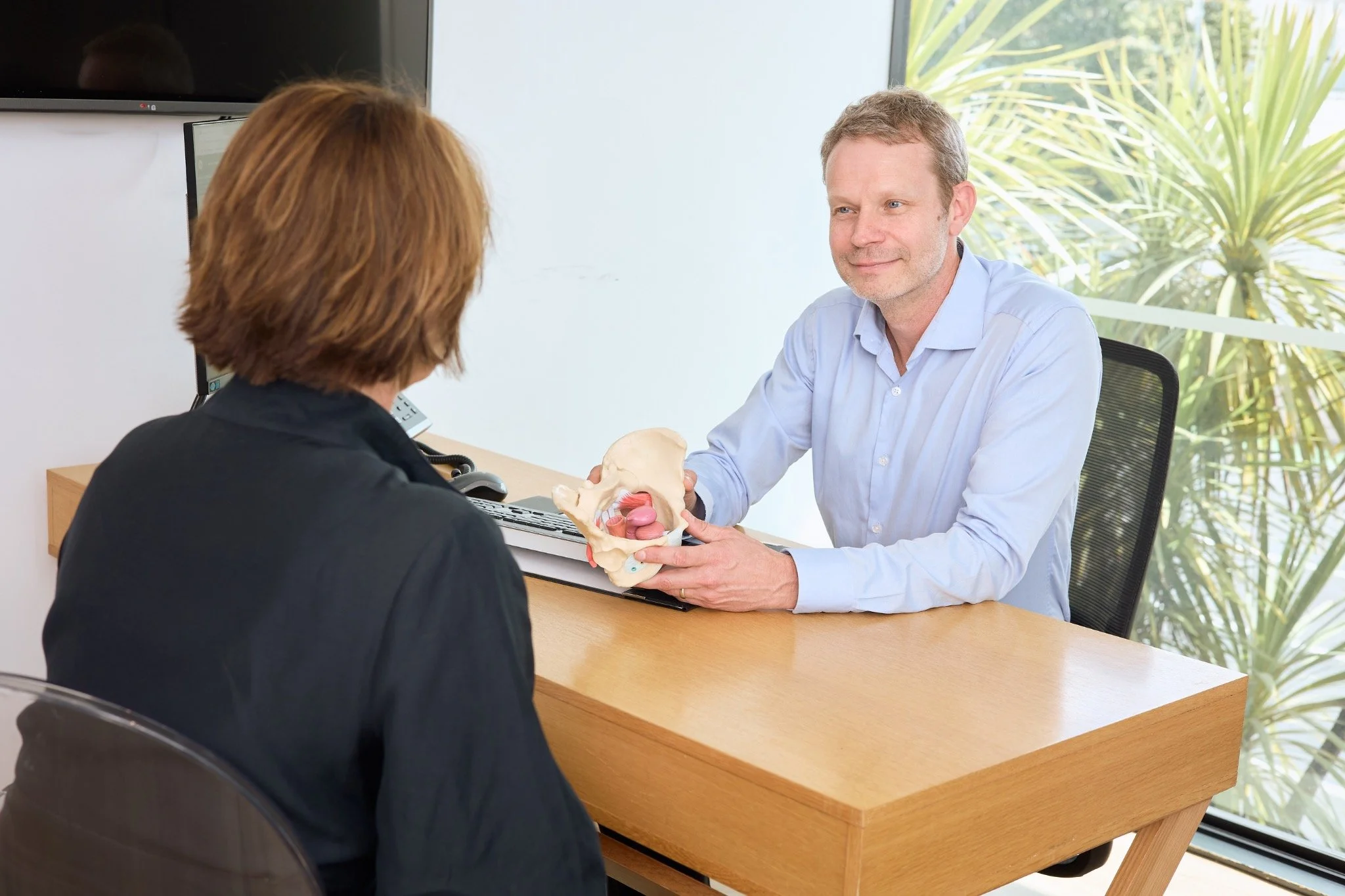
Fibroids, polyps and adenomyosis (tissue similar to the uterine lining within the muscle of the uterus) can all cause heavy periods. Sometimes there is no obvious structural cause. At your Tauranga consultation, I’ll ask about bleeding between periods, pain and symptoms of iron deficiency. A blood count checks for anaemia. Depending on the bleeding pattern, a scan, a look inside the uterus with a small camera, or a sample of the lining may be helpful.
Which treatments can make periods lighter?
Tranexamic acid taken on heavy days reduces blood loss. Some anti-inflammatory medicines can help with both bleeding and cramps. A hormonal intrauterine device such as Mirena often makes periods much lighter. Depending on the cause and your pregnancy plans, other options include hormonal tablets, removal of a polyp or fibroid, endometrial ablation (treating the uterine lining) or hysterectomy.
Frequently asked questions
Can I treat heavy periods while trying for a baby?
Yes. We can discuss non-contraceptive options and whether anything is affecting the shape of the uterine cavity. Let me know if pregnancy is possible before starting medication. Ablation is unsuitable if you want a future pregnancy.
How long does Mirena take to help?
Irregular bleeding is common at first. Improvement can take around six cycles. If the bleeding worsens or becomes difficult to manage, seek advice sooner.
When should I seek urgent help?
Heavy bleeding with faintness, marked weakness or shortness of breath needs urgent assessment. Call 111 if you collapse or cannot travel safely. Any bleeding after menopause, even spotting, warrants prompt medical assessment.
Related care: Fibroids · Laparoscopic hysterectomy · Gynaecology
Further reading: NICE: Heavy menstrual bleeding
Clinically reviewed by Dr Brad Chittenden, specialist gynaecologist and fertility specialist, 27 November 2026.